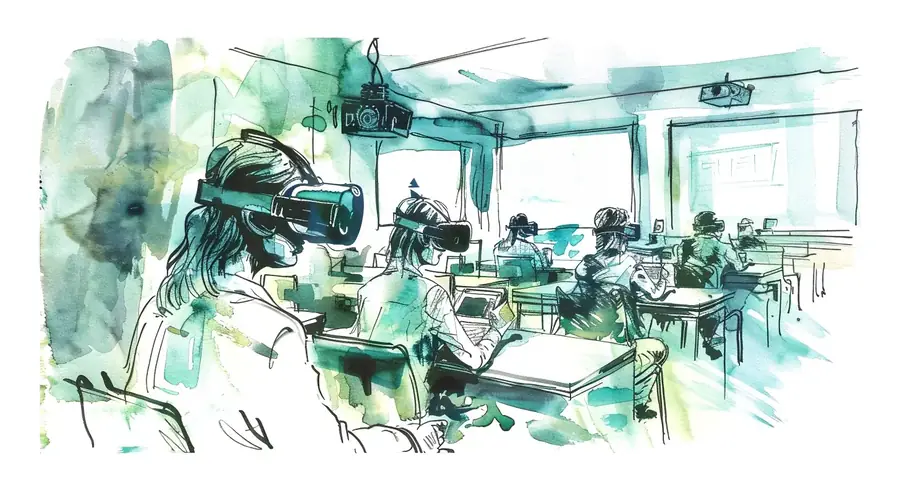
Five forces are reshaping Learning Experience Design (LXD) in 2024 — from AI-driven personalization to bite-sized mobile learning — and understanding them is essential for any L&D professional looking to stay relevant.
AI and Automation in L&D
The integration of AI into L&D is revolutionizing personalized learning experiences. AI algorithms analyze learner data to customize content, providing individualized assistance and guidance. This trend is pivotal for enhancing the effectiveness of learning materials.
KEY STRATEGIES:
The following strategies reflect how AI is being applied across modern learning programs:
- Personalized Content Delivery: Utilizing AI to analyze learner data and tailor learning content to individual needs.
- Adaptive Learning Pathways: Creating dynamic learning routes that adapt based on learner performance and preferences.
- Data Analytics and Insights: Leveraging AI for deep analytics to understand learner behaviors and improve course effectiveness.
- Chatbots and Virtual Assistants: Incorporating AI-powered assistants to provide immediate, personalized learner support.
- Automated Content Curation: Using AI to gather and recommend relevant learning resources automatically.
Personalized and Adaptive Learning
Adaptive learning systems are becoming increasingly important, tailoring educational content to individual learner needs. This approach enhances engagement, satisfaction, and learning outcomes by providing content that matches each learner’s unique learning style and requirements.
CORE APPROACHES:
These approaches form the backbone of effective personalized learning programs:
- Learning Analytics: Using data to understand and improve learning processes and outcomes.
- Competency-Based Learning: Tailoring learning experiences based on individual competencies and skills gaps.
- Dynamic Feedback Systems: Providing real-time, personalized feedback to learners.
- Learner Profiling: Creating detailed learner profiles to better tailor learning experiences.
- Adaptive Assessment Methods: Designing assessments that adapt to the learner’s skill level and progress.
VR and AR in Learning
Virtual Reality (VR) and Augmented Reality (AR) are set to offer immersive learning experiences, allowing learners to engage with virtual environments and objects. This technology makes learning more interactive, memorable, and closely aligned with real-world scenarios.
IMMERSIVE METHODS:
These methods leverage spatial and mixed-reality technologies to deepen learning:
- Immersive Learning Environments: Creating 3D, interactive learning spaces for deeper engagement.
- Augmented Reality Overlays: Enhancing real-world learning experiences with digital information overlays.
- Virtual Field Trips: Using VR to transport learners to different locations for experiential learning.
- Hands-on Simulation: Providing practical, interactive training using VR/AR simulations.
- Mixed Reality for Skill Training: Integrating VR and AR for realistic skill practice and application.
Gamification and Interactive Learning
The integration of game-based learning elements and interactive experiences is expected to increase learner motivation and engagement. These approaches stimulate active participation, critical thinking, and make learning more enjoyable.
ENGAGEMENT TACTICS:
The following tactics bring game design principles into educational contexts:
- Game-Based Learning: Utilizing games as a primary method for teaching concepts.
- Interactive Storytelling: Crafting narratives where learners make choices that affect outcomes.
- Points, Badges, and Leaderboards: Incorporating elements of competition and achievement to motivate learners.
- Branching Scenarios: Creating learning paths that change based on learner decisions.
- Engagement Mechanics: Designing interactive elements to maintain learner interest and participation.
Microlearning and Mobile Learning
The combination of microlearning and mobile learning is crucial for modern learners. Microlearning offers brief, focused content for quick consumption, while mobile learning enables access to educational materials anytime, anywhere, thus catering to the preference for flexible and on-the-go learning.
FLEXIBLE FORMATS:
These formats prioritize accessibility and learner convenience:
- Bite-Sized Learning Modules: Delivering content in small, manageable chunks for easier absorption.
- Just-in-Time Learning: Providing access to learning content exactly when needed.
- Learning Apps: Developing mobile applications dedicated to learning activities.
- Responsive Design: Ensuring learning materials are accessible on various devices.
- Social Learning Integration: Incorporating social media elements for collaborative learning experiences.
These trends signify a shift towards more dynamic, learner-centered, and technologically advanced learning experiences. They are essential for educators, instructional designers, and L&D professionals to understand and incorporate in order to stay ahead in the evolving field of LXD. Sources: Valamis Thirst Synthesia
Key Questions Answered
The most commonly asked questions about this topic, concisely answered.
- The five forces reshaping LXD are AI and automation in L&D, personalized and adaptive learning, immersive technologies (VR and AR), gamification and interactive learning, and microlearning combined with mobile learning. Together these trends are pushing the field toward more dynamic, learner-centered, and technology-enabled experiences.
- AI is enabling personalized content delivery, adaptive learning pathways, AI-powered chatbot support, automated content curation, and deep learning analytics. Rather than delivering the same content to every learner, AI-driven systems tailor materials to individual needs, pace, and preferences in real time.
- Adaptive learning specifically refers to systems that dynamically adjust content difficulty and sequencing based on ongoing performance data. Personalized learning is a broader concept that includes tailoring content, format, pace, and goals to individual learners — which may or may not be fully automated. All adaptive learning is personalized, but not all personalized learning is adaptive.
- Immersive simulations for high-stakes practice (medical procedures, safety training)
- Virtual field trips to locations learners cannot physically visit
- AR overlays that add information to real-world objects during on-the-job learning
- Mixed reality for skill practice — combining physical actions with digital feedback
- Gamification applies game design elements — points, badges, leaderboards, branching scenarios, and challenge mechanics — to non-game learning contexts. Research shows it can significantly boost motivation and engagement when game elements are tied to meaningful learning outcomes. It works best when intrinsic motivation is supported alongside extrinsic rewards.
- Microlearning delivers content in short, focused modules — typically 3–10 minutes — designed for a single learning objective. It works best for just-in-time performance support, spaced repetition reinforcement, and mobile-first delivery. It is less suited for complex skill development that requires sustained practice and contextual integration.
- Apply responsive design from the start rather than adapting desktop content. Use short text chunks, large tap targets, minimal scrolling, and media that loads quickly on mobile connections. Test on actual devices at every stage. Pair mobile delivery with push notifications or spaced repetition schedules to reinforce retention.
- Just-in-time (JIT) learning delivers the right information at the exact moment a learner needs it to perform a task — for example, a quick how-to video accessed on a mobile device right before completing a process. It shifts training from pre-event preparation to point-of-need performance support.
- Start with the trends that address the biggest performance gaps or learner pain points in your context. Conduct a needs analysis first, then evaluate which technology or approach best fits your audience, infrastructure, and budget. Avoid adopting trends for novelty alone — effectiveness should always be the primary criterion.
- Relevant skills include data literacy (understanding analytics), AI tool fluency, UX and interaction design, mobile-first thinking, and learning science fundamentals that help evaluate whether a trend is genuinely effective. Staying connected to communities of practice and reading L&D research publications helps practitioners keep pace with change.
- VR (Virtual Reality) immerses the learner in a fully simulated environment — useful for high-stakes practice like medical procedures, safety drills, or soft skills scenarios. AR (Augmented Reality) overlays digital information onto the real world — ideal for on-the-job performance support, equipment maintenance, and field training. VR replaces the environment; AR enhances it.
- Not replacing — complementing. Microlearning works best for just-in-time support, reinforcement, and mobile delivery of discrete knowledge. Complex skill development, deep conceptual understanding, and programs requiring sustained practice still benefit from longer-format courses. The most effective L&D strategies use both: comprehensive courses for initial learning, microlearning for ongoing reinforcement and performance support.