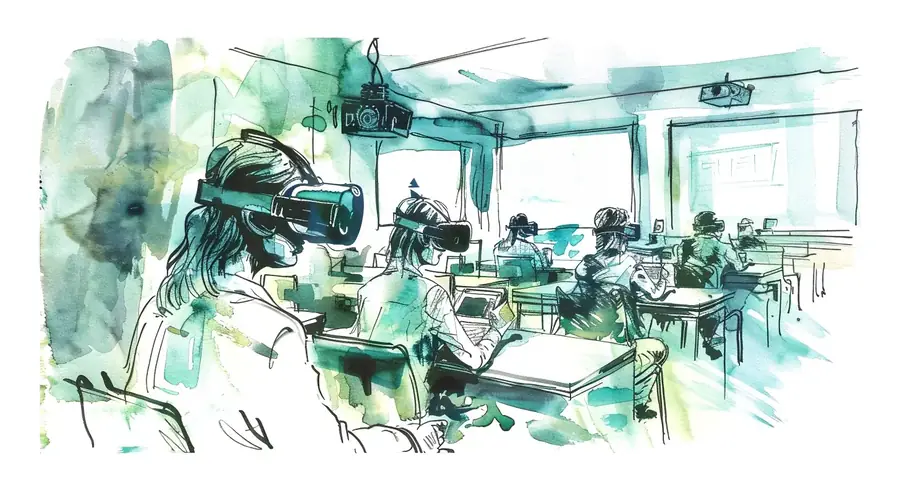
Curriculum design is a cornerstone of effective educational and instructional development — a strategic discipline that requires defining clear goals, selecting relevant content, organizing materials, and choosing the right instructional and assessment methods.
Why is Curriculum Design important?
Effective curriculum design is crucial for several reasons:
- Alignment with educational goals: Ensures educational content aligns with learning objectives and institutional goals.
- Learner engagement: A well-designed curriculum engages students and facilitates deeper understanding.
- Adaptability: Allows flexibility to adapt to different learning styles and environments.
- Assessment efficacy: Includes appropriate assessment methods to evaluate and improve student learning outcomes.
Diverse approaches in Curriculum Design
Subject-Centered Design: Focuses on a particular subject or discipline. Provides in-depth knowledge with a structured framework, often used in formal education settings.
Learner-Centered Design: Prioritizes the needs, interests, abilities, and learning styles of the student. More flexible, adapting to the individual rather than adhering strictly to a predefined curriculum. Includes group projects, hands-on activities, and self-paced learning modules.
Problem-Centered Design: Designed around solving real-world problems or challenges. Encourages students to apply learning to practical situations, enhancing problem-solving and critical thinking skills. Highly interactive and often interdisciplinary.
Courses for enhancing Curriculum Design skills
The following courses are hosted on Udemy and offer practical, on-demand instruction for building curriculum design skills at various levels.
An introduction to the theoretical frameworks that underpin curriculum design, covering foundational philosophies and evaluation approaches.
Key topics- Curriculum importance and development
- Learner-centered curriculum
- Naturalism and idealism in education
- Measurement and evaluation techniques
A practical course covering the essentials of curriculum development and training design, from foundational concepts to student-centered approaches.
Key topics- Basics of curriculum development
- Training development techniques
- Student approach in education
A focused course on making complex content intuitive and easy to understand, using structured frameworks for lesson and curriculum planning.
Key topics- 15-step "Lightbulbs" curriculum plan
- 9-step "Elegantly Simple" lesson plan strategy
- Five-step recipe for tackling tough topics
- Writing simple, clear lesson plans
An applied, intermediate-level course for practitioners ready to level up their curriculum writing and course design skills with professional-grade techniques.
Key topics- Identifying audience needs, goals, and desires
- Creating effective training tools for daily use
- Designing courses efficiently and effectively
- Making curriculum writing easier and clearer
- Ensuring content retention and "aha!" moments
- Developing creative and exciting activities
Key Questions Answered
The most commonly asked questions about this topic, concisely answered.
- Curriculum design is the strategic process of planning and organizing educational content — defining learning goals, selecting relevant topics, sequencing materials, choosing instructional methods, and building in appropriate assessment. It sits at the heart of all formal and structured learning programs, from workplace training to academic courses.
- Curriculum design refers to the big-picture planning of a learning program — what will be taught, in what order, and toward what goals. Instructional design is more granular — it focuses on how specific lessons, modules, or activities are structured to achieve those goals. The two are deeply complementary and often overlap in practice.
- Three key approaches are:
- Subject-Centered Design — organized around a specific discipline or body of knowledge, common in formal education
- Learner-Centered Design — built around the interests, needs, and learning styles of the individual learner, more flexible and adaptive
- Problem-Centered Design — structured around solving real-world problems, highly interactive and often interdisciplinary
- Without sound curriculum design, training can feel disconnected, overloaded, or irrelevant. Good curriculum design ensures content aligns with learning objectives and organizational goals, engages learners at the right level, accommodates different learning styles, and includes evaluation methods that actually measure what matters.
- Backward design (also known as Understanding by Design, developed by Wiggins and McTighe) starts with the end in mind — you define desired outcomes first, then determine what evidence of learning would look like, and finally design the learning activities and content. This approach ensures all curriculum decisions serve the actual learning goals.
- The courses listed in this post range from 1 hour to 6.5 hours of on-demand video content. Self-paced online platforms like Udemy allow you to work through material at your own speed. More comprehensive curriculum design skills development, including practice and application, typically takes several weeks of focused study.
- The Intuitive Curriculum Development course (1.5 hours) and the Theoretical Foundations of Curriculum course (1 hour) are good starting points. For a more practice-oriented approach, Instructional Design Pro (Part 1) (6.5 hours) dives into applied curriculum writing and is suitable for those with some design background.
- Competency-based curriculum design organizes learning around specific, measurable skills or competencies rather than time spent in training. Learners progress when they demonstrate mastery of each competency, regardless of how long it takes. This approach is particularly effective in vocational training and professional development contexts.
- Use a process called constructive alignment — ensure that every learning activity and every assessment directly connects to one or more stated learning objectives. A common tool is a curriculum map or alignment table that lists each objective alongside the content that teaches it and the assessment that measures it.
- A curriculum is the full scope and sequence of a learning program. A syllabus is a learner-facing document summarizing the curriculum — topics, schedule, and expectations. A lesson plan is the detailed design for a single teaching session, specifying activities, timings, and materials. Each operates at a different level of granularity.
- Yes. AI tools like ChatGPT can accelerate curriculum mapping, learning objective generation, scope and sequence drafting, and assessment alignment. However, AI-generated curricula require careful human review for accuracy, cultural relevance, and pedagogical soundness. AI is best used as a brainstorming and drafting partner, with the instructional designer providing the strategic judgment and contextual knowledge.
- Curriculum design focuses on the macro structure — what content is taught, in what sequence, toward what goals, and how it is assessed across a full program. Learning experience design (LXD) encompasses curriculum design but adds a focus on the learner's subjective experience — engagement, motivation, usability, and emotional journey. LXD borrows from UX design to make the curriculum not just logical but genuinely compelling to learn.