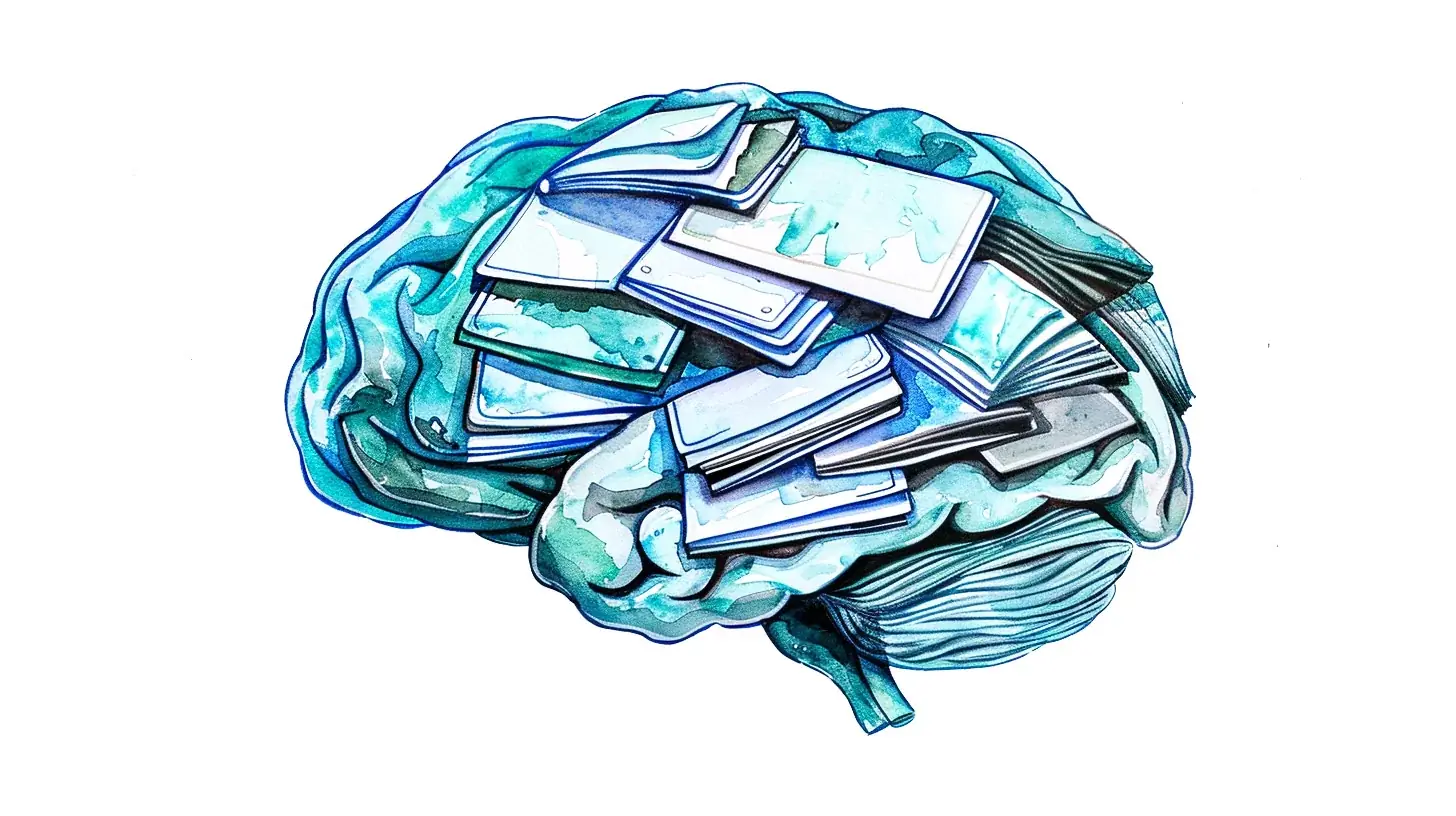
Cognitive Learning Theory explores how people acquire, process, and store information. It focuses on internal mental processes that influence knowledge acquisition, moving beyond behaviorist models that emphasize external stimuli and responses.
Origins and Influences
Developed as a response to behaviorist models (Skinner, Watson), cognitive theorists argued that learning is an active, internal process shaped by mental representations, problem-solving strategies, and conceptual understanding.
Key contributors to the field include:
- Jean Piaget: Stage-based cognitive development model with schemas as foundational knowledge structures
- Jerome Bruner: Discovery learning and scaffolding — guidance gradually reduced as learners develop
- Ulric Neisser: Coined “cognitive psychology” and information processing theory — likening the mind to a computer
- Lev Vygotsky: Zone of Proximal Development aligns with cognitive perspectives on guided learning
Key Principles
1. Information Processing Theory
Information Processing Theory likens the human mind to a computer, processing information through encoding, storage, and retrieval.
- Encoding: Information taken in through sensory input, transformed into meaningful format
- Storage: Information retained in short-term or long-term memory
- Retrieval: Stored knowledge accessed and applied when needed
Use multimodal instruction; break content into manageable chunks; use retrieval practice (quizzes, self-testing); provide worked examples before independent problem-solving.
2. Schema Theory
Schemas are mental frameworks helping individuals organize and interpret information. Learning occurs when new information is integrated into existing schemas (assimilation) or when schemas are modified to accommodate new information (accommodation).
Activate prior knowledge before introducing new concepts; use analogy-based teaching; identify and address misconceptions.
3. Constructivist Learning
Individuals actively construct knowledge rather than passively absorb it. Meaningful learning occurs through problem-solving, inquiry, and reflection.
Promote inquiry-based learning; use project-based learning for real-world applications; facilitate peer collaboration; use scaffolding techniques.
4. Cognitive Load Theory (John Sweller)
Working memory has limits. Cognitive Load Theory identifies three types of cognitive load: Intrinsic (complexity inherent to the material), Extraneous (unnecessary complexity from poor design), and Germane (mental effort used for schema construction).
Reduce extraneous cognitive load by eliminating distractions; use dual coding (text + visuals); present step-by-step instructions; encourage spaced repetition.
5. Metacognition and Self-Regulated Learning
Metacognition is awareness and regulation of one’s own learning process. Self-regulated learners actively plan, monitor, and evaluate their strategies.
Teach learners to set specific goals and track progress; encourage self-questioning; use reflective journaling; implement think-aloud exercises.
6. Transfer of Learning
Transfer of learning refers to knowledge and skills acquired in one context being applied to another. Effective learning enables application in various real-world scenarios.
Use authentic assessments requiring application in new contexts; use case studies and simulations; encourage learners to explain concepts to others.
Key Questions Answered
The most commonly asked questions about this topic, concisely answered.
- Cognitive Learning Theory focuses on the internal mental processes involved in learning — how people acquire, process, organize, store, and retrieve information. It emerged as a response to behaviorism by treating the mind as an active processor rather than a passive receiver of stimuli, drawing on concepts like memory, schemas, and problem-solving strategies.
- Behaviorism focuses on observable behavior and external stimuli-response relationships, ignoring internal mental states. Cognitive theory looks inside the mind — examining how learners perceive, interpret, organize, and remember information. It recognizes that two people can receive the same stimulus and respond very differently based on their existing knowledge structures and mental frameworks.
- Information Processing Theory compares the human mind to a computer — information enters through sensory input, is encoded into meaningful formats, stored in working or long-term memory, and later retrieved when needed. It highlights that working memory has very limited capacity, which has major implications for instructional design.
- Schemas are mental frameworks that organize and interpret information. New learning works by either fitting new information into existing schemas (assimilation) or restructuring schemas to accommodate new, conflicting information (accommodation). Designers apply this by activating prior knowledge before introducing new content and using analogies to connect the unfamiliar to the familiar.
- Metacognition is awareness and regulation of one's own learning — knowing what you know, recognizing when you don't understand something, and adjusting strategies accordingly. Learners with strong metacognitive skills are more efficient and resilient. LXD can develop it through self-assessment prompts, reflective journaling, goal-setting activities, and think-aloud exercises.
- Transfer of learning is the ability to apply knowledge or skills acquired in one context to different situations. Near transfer (similar contexts) is easier to achieve; far transfer (very different contexts) is harder. Design for transfer by using varied examples, authentic assessments, case studies that differ from instructional examples, and asking learners to explain concepts to others.
- Key contributors include Jean Piaget (schema theory and cognitive development stages), Jerome Bruner (discovery learning and scaffolding), Ulric Neisser (coined cognitive psychology and information processing), and Lev Vygotsky (Zone of Proximal Development, linking social interaction to cognitive growth).
- Cognitive Load Theory (Sweller) is a specific application within the broader cognitive tradition. It focuses on the limits of working memory and how instructional design can either respect or overwhelm those limits. It distinguishes between intrinsic load (content complexity), extraneous load (poor design), and germane load (productive schema-building effort).
- Practical applications include: breaking content into manageable chunks, using retrieval practice (quizzes, self-testing), activating prior knowledge at the start of lessons, using worked examples before independent practice, providing multimodal instruction (text + visuals), reducing distractions, and scaffolding complexity gradually.
- Cognitive learning theory focuses on how the brain processes, stores, and retrieves information — treating learning as an internal mental process of schema building and information processing. Constructivism adds that learners actively construct meaning through experience and social interaction — knowledge is not just processed but personally created. Cognitivism is more aligned with structured instruction; constructivism favors exploration and discovery.
- Spaced repetition — revisiting material at increasing intervals over time — is one of the most robust findings in cognitive science. It works because retrieval from long-term memory strengthens the neural pathways associated with that knowledge. Tools like Anki and platforms with spaced review features apply this principle directly. For instructional designers, building spaced review into learning programs dramatically improves long-term retention.