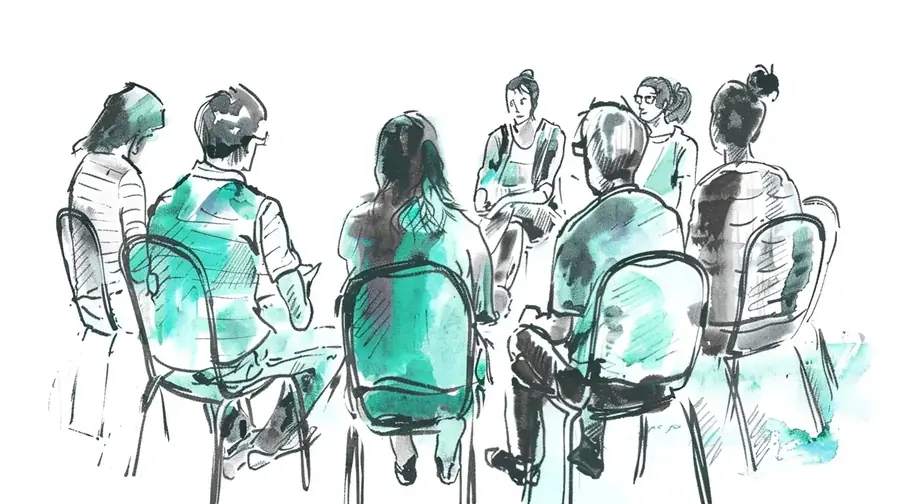
Critical Pedagogy, developed by Paulo Freire, is a transformative educational approach that challenges traditional notions of teaching and learning by advocating for student empowerment, dialogue, and critical thinking. Rooted in social justice and political awareness, it equips learners with tools to question and challenge oppressive systems.
Freire’s Pedagogy of the Oppressed (1968) highlights the role of education as a means of liberation. Rather than viewing students as passive recipients of knowledge, he argued for a dialogical model where teachers and learners collaborate to construct meaning, encouraging critical consciousness (conscientização).
Origins and Influences
Freire’s Critical Pedagogy emerged in response to authoritarian educational models that reinforced hierarchical structures and social inequality. It was influenced by Marxist thought, liberation theology, and existentialist philosophy.
Karl Marx (class struggle), John Dewey (progressive education), Jean Piaget (constructivism), Lev Vygotsky (sociocultural theory), Antonio Gramsci (hegemony), Existentialist Philosophy (Sartre, Fanon).
Key Principles
1. Education as a Tool for Liberation
Freire opposed the “banking model” of education, where students passively receive information. Instead, he promoted a problem-posing approach that encourages engagement, dialogue, and critical thinking.
Encourage student-led discussions and inquiry-based learning; incorporate real-world issues into the curriculum; use case studies and problem-solving exercises; facilitate interdisciplinary projects connecting education to social justice themes.
2. Dialogical Learning and Participation
Learning should be a two-way process — teachers and students engage in open dialogue to co-construct knowledge. This challenges traditional hierarchical classroom structures, promoting mutual learning and questioning dominant ideologies.
Use collaborative strategies such as debates, peer teaching, and group projects; foster inclusive discussions valuing diverse perspectives; implement participatory decision-making.
3. Developing Critical Consciousness
Conscientização is the process of enabling learners to recognize, analyze, and challenge oppressive structures in society. It goes beyond awareness to encourage active engagement toward social justice.
Develop assignments critically analyzing social, economic, and political issues; integrate social justice themes into lesson plans; encourage civic engagement through service-learning and community-based projects; facilitate media literacy activities.
4. The Role of Teachers as Facilitators
Teachers become facilitators of learning rather than authoritative figures. They create an environment where students construct knowledge, engage in critical dialogue, and develop independent thought.
Adopt student-centered approaches; use mentorship and coaching techniques; implement inquiry-based learning strategies that empower students to investigate topics of interest.
5. Education for Social Transformation
Education is inherently political — it can either maintain the status quo or drive social change. By fostering critical awareness and agency, education becomes a tool for societal transformation.
Encourage activism through student-led research projects addressing social issues; promote media literacy and critical analysis of societal narratives; use interdisciplinary approaches connecting education to broader challenges.
Key Questions Answered
The most commonly asked questions about this topic, concisely answered.
- Critical Pedagogy is an educational approach developed by Paulo Freire that challenges traditional, hierarchical models of teaching. It positions education as a tool for liberation and social transformation rather than a mechanism for transmitting established knowledge. Critical Pedagogy promotes dialogue, critical consciousness, and learner agency — encouraging students and teachers to collaboratively examine and challenge oppressive systems.
- Paulo Freire (1921–1997) was a Brazilian educator and philosopher whose 1968 book Pedagogy of the Oppressed became one of the most influential works in educational theory. Drawing on Marxist thought, liberation theology, and existentialism, Freire argued that traditional education reinforces social inequality by treating students as passive recipients. His alternative — dialogical, problem-posing education — aims to develop critical consciousness and agency in learners.
- The banking model is Freire's term for traditional education in which teachers 'deposit' knowledge into passive students — as if students were empty bank accounts. This model, Freire argued, suppresses critical thinking, reinforces power hierarchies, and serves the interests of dominant social groups. He contrasted it with a problem-posing approach in which learners actively engage with real issues and co-construct knowledge with educators.
- Conscientização (Portuguese for critical consciousness) is the process through which learners develop the capacity to recognize, analyze, and act against oppressive social, economic, and political structures. For Freire, education's highest purpose is not academic achievement but the development of this critical awareness. In LXD, conscientização-inspired design encourages learners to examine assumptions, question dominant narratives, and connect learning to real-world power dynamics.
- LXD applications of Critical Pedagogy include:
- Centering learners' lived experiences as legitimate knowledge
- Using problem-posing and inquiry-based activities instead of pure content delivery
- Designing inclusive discussions that value diverse and dissenting perspectives
- Incorporating social justice themes and real-world issues into case studies
- Involving learners in co-designing learning goals and assessment criteria
- Critically examining whose voices, examples, and frameworks dominate the curriculum
- Yes, though it requires adaptation. Critical Pedagogy principles are especially relevant in: diversity, equity, and inclusion (DEI) training (examining systemic bias); leadership development (questioning assumptions about power and decision-making); ethics training (fostering critical moral reasoning); and community-facing organizations. In purely technical or compliance contexts, the application is more limited — but even there, learner voice, dialogue, and relevance can be enhanced through critical approaches.
- Critical Pedagogy shares with constructivism the view that learners actively construct knowledge rather than passively receive it. However, Critical Pedagogy goes further — it politicizes the process of knowledge construction, asking whose knowledge is being constructed, in whose interests, and toward what social ends. Where constructivism focuses on cognitive processes, Critical Pedagogy foregrounds power, ideology, and social transformation.
- Dialogical learning is learning that happens through genuine two-way dialogue — where both teachers and learners bring knowledge, question assumptions, and co-create understanding. Freire positioned dialogue as not merely a method but an ethical stance: it requires humility, trust, love (in the sense of deep care for the other), and a rejection of epistemic arrogance. In design terms, dialogical learning means creating genuine conversational structures, not just Q&A.
- Critical thinking is a cognitive skill — the ability to analyze arguments, evaluate evidence, and reason logically. It is generally conceived as politically neutral. Critical Pedagogy is an explicitly political educational philosophy that uses critical thinking as one tool toward a broader goal of social justice and transformation. Critical Pedagogy is concerned with who benefits from existing educational and social arrangements, and how education can change those arrangements.
- Critiques of Critical Pedagogy include:
- It can be prescriptive in its own right — assuming learners should adopt particular political positions
- Difficult to implement in institutional settings constrained by standardized curricula and assessment
- Risk of teacher imposing their critical agenda under the guise of liberation
- Limited empirical research base compared to other educational frameworks
- May be perceived as inappropriate in politically sensitive or corporate training contexts
- Critical Pedagogy provides the theoretical foundation for many DEI training approaches — particularly those that go beyond awareness to address systemic power dynamics, institutional bias, and structural inequity. However, corporate DEI programs must navigate the tension between Freire's transformative goals and organizational constraints. The most effective programs use critical pedagogy principles to foster genuine dialogue and reflection rather than compliance-based checkbox training.
- Critical Pedagogy (Freire) aims to transform oppressive social structures through education — it is explicitly political and systemic. Culturally responsive teaching (Gay, Ladson-Billings) focuses on making instruction relevant and accessible to learners from diverse cultural backgrounds — it is more classroom-focused. Both value equity, but Critical Pedagogy seeks social transformation while culturally responsive teaching seeks equitable learning outcomes within existing systems.